
Cat brain genetics for survival
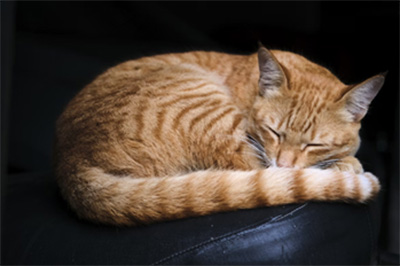
We have no idea who came up with the idea that cats have 9 lives but we know from research that they are inveterate survivors. A recent study published in Current Biology enlightened my brain on a sleeping survival adaptation. Lateralized Sleeping Positions in Domestic Cats by Sevim Isparta, et al, explained that the average cat sleeps 12-16 hours/day. That makes them vulnerable to predators 60-65% of their lives. A “leftward” posture is preferred by 2/3 of kitties so that when they wake up, they have an immediate, unobstructed view to the left.
Their left brain recognizes a threat, allowing their right hemisphere, which is programmed to react faster, to get them out of a jam. Their quick-acting right side also kicks into gear when an unsuspecting mouse, makes a move. Researchers call these snacks on legs “emotionally arousing.” Mmm…
Those speedy right-sided reactions save feline lives when the hunter becomes the hunted. Coyotes who approach cats on the right might eat better. I won’t breathe a word to those urban rapscallions who might snag my fuzzy white kitty, Gaston, for fast food.
Cats and dogs, as I often remind my clients and readers, are not little people in furry suits. They are domestic pets who belong with us, but they are genetically programmed to survive very differently.
Dogs are a social species. In nature, they hunt, protect their territory, their breeding females and their young as a group. When they get sick or injured they cry out to their comrades for help. Cats, on the other hand, are rugged individuals. They don’t organize hunting parties or invite guests for dinner. When they get in trouble, they’re on their own.
Despite the nonstop flow of groceries we provide our pets they are ruled by their genetics. It’s usually one dog in a group who raises the alarm for the others when a threat, like the UPS truck, is perceived. Our kitties, more often canted to the left when asleep, bolt for cover thanks to their ever-vigilant right brains. They live in the moment.
·
For help with behavior problems, you can sign-up for a Zoom Group Conference on my website, drjeffnichol.com.
Dr. Jeff Nichol is a residency-trained veterinary behaviorist. He provides consultations in-person and in groups by Zoom (drjeffnichol.com). Each week he shares a blog and a video to help bring out the best in pets and their people. Sign up at no charge at drjeffnichol.com. Post pet questions through my website, drjeffnichol.com/contact/ or by US Post to 4000 Montgomery Blvd. NE, Albuq, NM 87109.
